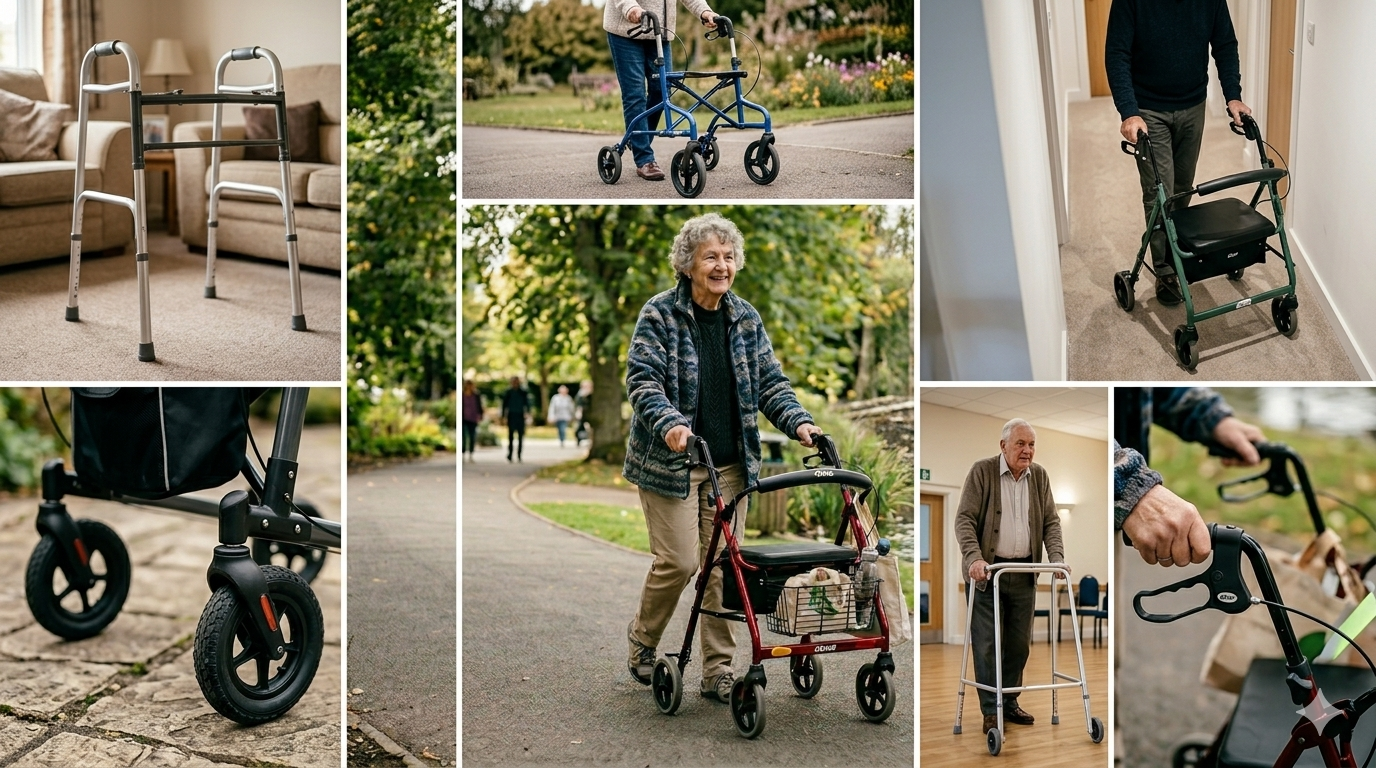
Here’s a clear, practical way to choose the right one—and then the right type within that category.
🧭 Step 1: Rollator or Walker? (Start Here)
🚶 Standard Walker (no wheels or 2 wheels)
- Maximum stability
- You lift or step it forward
- Best if you:
- Have significant balance issues
- Need to put weight on the device
- Are recovering from surgery or injury
👉 Downsides: slower, more effort to use
🛞 Rollator (3 or 4 wheels + brakes + seat)
- Designed for mobility and independence
- Easier to push and maneuver
- Often includes a seat for resting
👉 Best if you:
- Need balance support, not full weight support
- Walk longer distances or outdoors
- Want convenience and comfort
Rollators typically have wheels, hand brakes, and seats, making them more functional but slightly less stable than basic walkers
🛒 Step 2: Choose the Right Type (Top Picks by Need)
🥇 Best Overall Rollator (Lightweight & Easy to Use)
byACRE Carbon Ultralight Rollator
$1,111.99•Best Buy Canada + others•
✔ Extremely lightweight (~10.6 lbs)
✔ Easier to lift into cars or carry
✔ Smooth, ergonomic design
👉 Best for: everyday use, travel, and users who struggle with heavy walkers
💰 Budget-Friendly Rollator
✔ Lower cost, widely available
✔ Good for indoor + light outdoor use
✔ Slightly heavier but reliable
🏡 Balanced Everyday Option
✔ Good mix of stability + mobility
✔ Comfortable for longer walks
✔ Durable and widely trusted
🧍 Best for Taller Users
✔ Higher handle range
✔ Better posture for tall individuals
✔ Reduces back strain
📊 PRODUCT COMPARISON TABLE
| Feature | ||||
|---|---|---|---|---|
| Weight | ~10.6 lbs | ~12–14 lbs | ~17–18 lbs | ~20 lbs |
| Frame | Carbon fiber | Aluminum | Aluminum/steel | Aluminum |
| Best For | Travel & daily use | Budget buyers | Everyday reliability | Tall users |
| Portability | Excellent | Good | Moderate | Moderate |
| Seat Included | Yes | Yes | Yes | Yes |
| Price Range | Premium | Budget | Mid-range | Mid-range |
⚙️ Step 3: Key Buying Factors (Most People Get These Wrong)
⚖️ 1. Weight (Biggest Regret Factor)
- Lightweight rollators (10–12 lbs) are easier to lift and transport
- Heavier models = more stable, but harder to manage
👉 If you use a car often → prioritize lightweight
📏 2. Fit & Height
- Handles should align with your wrist when standing upright
- Slight bend in elbows
👉 Wrong height = back pain + poor control
🛞 3. Wheel Size & Terrain
| Wheel Size | Best Use |
|---|---|
| 6–8″ | Indoors, smooth floors |
| 8–10″ | Sidewalks, mixed use |
| 10″+ | Rough terrain, outdoors |
🧠 4. Stability vs Mobility Trade-Off
- Walker = more stable
- Rollator = more freedom
👉 Choose based on your balance, not preference
🪑 5. Seat & Comfort
- Rollators offer built-in seating
- Great for:
- Shopping trips
- Long walks
- Fatigue management
⚠️ Common Mistakes
- Choosing a rollator when you actually need a walker
- Ignoring weight (biggest complaint later)
- Buying small wheels but needing outdoor use
- Not checking weight capacity (often 250–350 lbs range )
🧭 Quick Decision Guide
- Need maximum support / rehab? → Walker
- Need mobility + independence? → Rollator
- Travel or lifting concerns? → Lightweight rollator
- Mostly indoors? → Smaller wheels
- Outdoor walking? → Larger wheels
👍 Bottom Line
- Walkers = support first
- Rollators = movement first
- The right choice depends on how much weight-bearing vs balance support you need
Lightweight designs and proper fit make the biggest difference in daily comfort and usability.