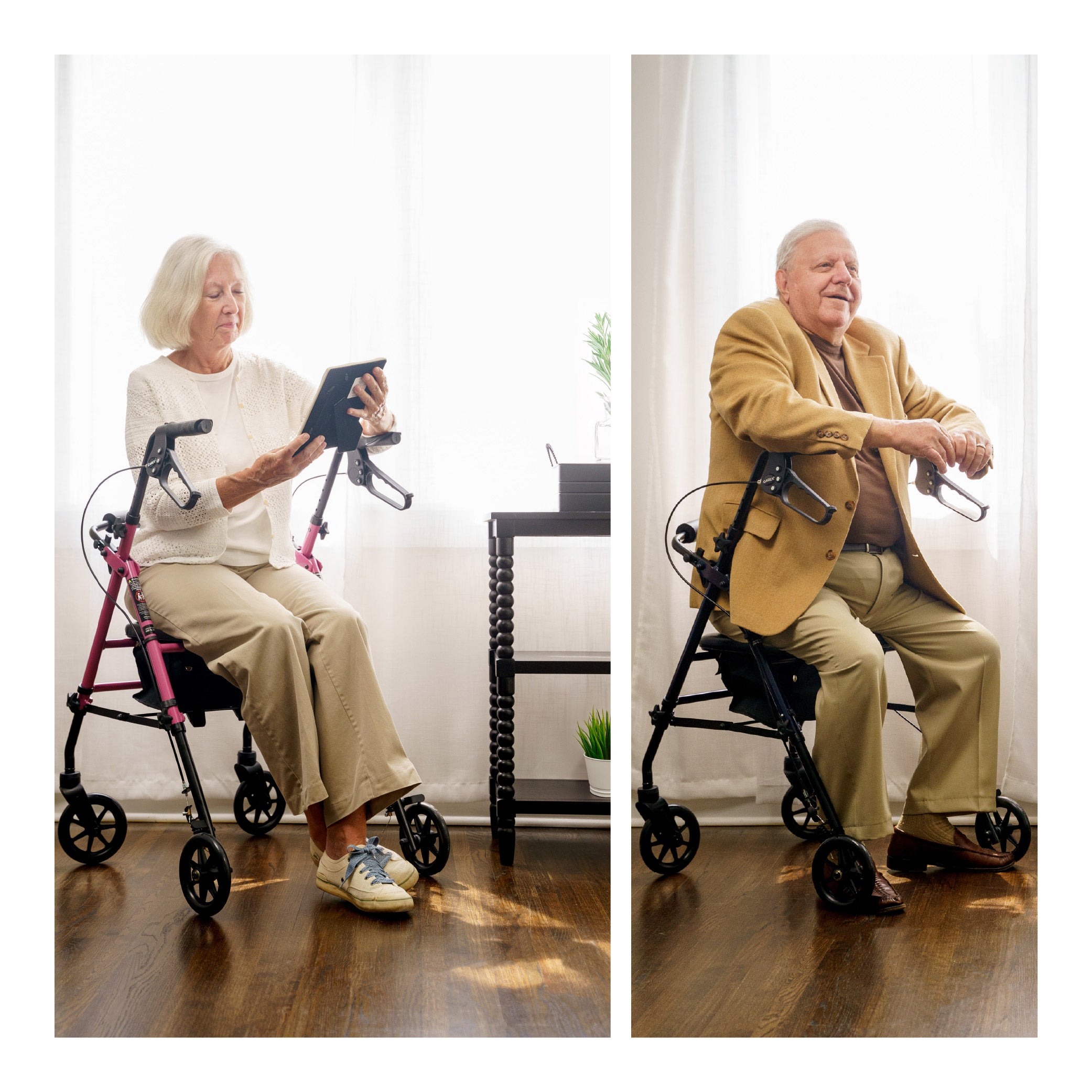
A little care here can extend its lifespan and prevent annoying issues like squeaky wheels or weak brakes.
🏠 Everyday Storage at Home
- Choose a dry, clutter-free spot
Moisture can lead to rust or wear on moving parts. - Keep it folded when not in use
Most rollators are designed to stand upright when folded—great for closets or corners. - Avoid high-traffic areas
Prevents accidental bumps that can misalign wheels or loosen parts. - Store near the entry if used daily
Makes it easy to grab without moving it around constantly.
🚗 Storing in a Car
- Fold it fully before placing in trunk
Reduces stress on joints and makes it more stable during transport. - Lay it flat or secure it upright
Prevents shifting while driving. - Use a cover or blanket
Protects against dirt, scratches, and extreme temperatures. - Avoid long-term storage in extreme weather
Heat can damage grips and plastic parts; cold can stiffen brakes and cables.
🧳 Travel & Temporary Storage
- Use a travel bag if available
Especially useful for flights or buses. - Label it clearly
Include contact info when traveling. - Remove loose accessories
Baskets, trays, or cup holders can get damaged if left attached.
🧼 Before Long-Term Storage
If you won’t be using it for a while:
- Clean the frame and wheels
Remove dirt, dust, and debris. - Dry thoroughly
Prevents rust or corrosion. - Check and tighten screws
Avoids issues when you bring it back into use. - Release brake tension slightly
Keeps cables from staying under constant strain.
🔧 Smart Storage Tips
- Hang lightweight accessories separately
- Keep a small maintenance kit nearby
- Store it where it’s easy to inspect periodically
⚠️ Common Storage Mistakes
- Leaving it outside or in damp areas
- Storing it unfolded in tight spaces (risk of damage)
- Ignoring dirt buildup on wheels before storing
- Keeping weight in the basket during storage
👍 Bonus Tip
If space is tight, consider a slim or side-folding rollator—they’re specifically designed for compact storage in small apartments or vehicles.